
Garage Door Stuck or Sluggish on a Cold Morning
Rule of thumb: if your garage door is hard to move first thing on a cold morning, the problem is almost always mechanical, not an icy door literally welded shut. Comal County doesn't see the hard freezes that crack concrete or glue steel to slab the way it happens farther north. The exception is a genuine cold snap with heavy overnight dew or a rare ice event — when that happens, the rubber weatherstripping along the bottom of the door can bond to a damp concrete floor, and that's a different fix than a sluggish opener.
What You'll Notice
- The door won't move at all when you hit the remote, and the opener motor hums or strains
- It opens a few inches, stalls, then reverses back down
- You hear a new grinding or clunking sound from the opener unit
- The opener runs its full cycle, but the door doesn't actually travel with it
- The door feels noticeably heavier to lift by hand than it did in summer
None of these mean you need a new door. They're symptoms, and each one points toward a specific cause. Here's the order worth checking them in, starting with the most obvious after a cold night.
1. A Frozen or Stuck Bottom Seal
If the door won't move an inch and the opener is clearly straining against something at the bottom, stop and look at the weatherstripping along the base of the door. After a cold night with heavy dew or frost, that rubber seal can bond lightly to the concrete slab. Forcing it with the opener can tear the seal or strain the opener's drive gear.
The fix: don't keep hitting the remote. Run a putty knife or the edge of a flat tool gently along the seal to break the bond, or pour a little warm (not hot) water along the seam and let it loosen. If this happens more than once or twice a season, the seal itself is likely worn thin or cracked and holding moisture against the slab longer than it should — replacing the bottom seal is a cheap fix compared to the opener damage repeated forcing can cause.
2. Thickened or Dirty Lubricant on Tracks and Rollers
This is the most common cause of a door that's just slow and stiff rather than fully stuck. Old lubricant thickens in cooler temperatures, and in this area it's usually mixed with dust and grit kicked up by wind, which turns grease gummy instead of slick.
The fix: wipe down the tracks with a dry cloth to remove old grease and debris, then apply a silicone-based garage door lubricant to the rollers, hinges, and springs — it holds up better across our temperature swings than household grease or WD-40, which actually attracts dust.
3. Springs That Feel Tighter or Heavier
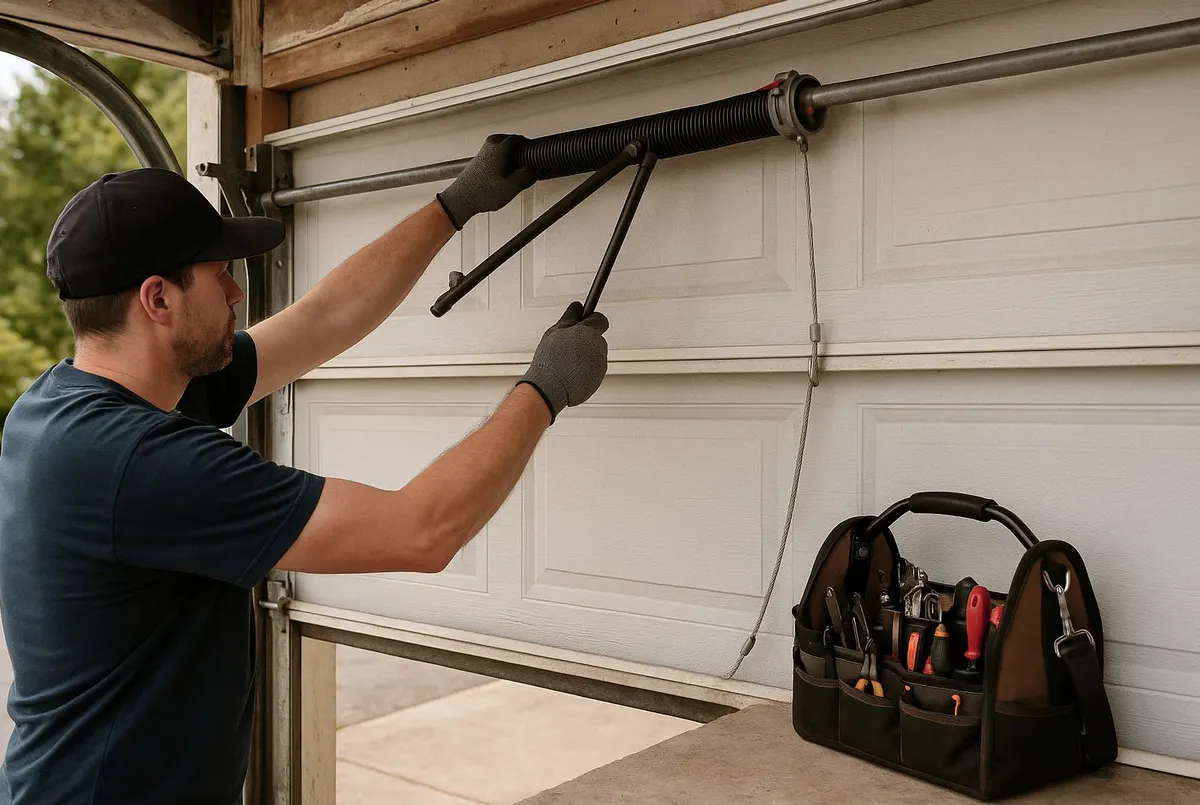
Metal contracts slightly in cold weather, which can make torsion springs feel a touch stiffer and the door noticeably heavier to lift by hand, especially if the springs are already older or sitting near the end of their cycle life after a long hot summer of daily expansion and contraction.
The fix: this is not a DIY adjustment. A technician checks spring tension and balance, and if the springs are near the end of their rated cycles, replaces them rather than re-tensioning a spring that's already fatigued. A door that feels heavy by hand, cold morning or not, is usually a spring telling you it's close to failing.
4. Opener Gears, Chain, or Belt Tension
If the motor runs but the door barely moves or moves out of sync, check the opener's drive mechanism next. Plastic drive gears inside the opener housing can become slightly more brittle in cold weather, and chains that were already a little loose tend to show more slack and slippage when everything else is working harder.
The fix: this means opening the opener housing to inspect the gear and chain or belt tension, and replacing the drive gear if it's stripped or cracked.
5. Shifted Travel Limits
If the door stalls partway and reverses, the opener's travel limits may have drifted slightly as cold temperatures cause the door panels and track to contract. This isn't damage, just a setting that needs to be reset to match the door's actual range of motion.
When to Call New Braunfels Garage Door
If you've cleared the bottom seal and the door still won't move, feels unusually heavy, or the opener is making new noises, stop operating it and call us. Our Garage Door Maintenance visits cover exactly this — cleaning and lubricating tracks and hardware, checking spring tension, and resetting opener limits before small stiffness turns into a stuck door or a snapped spring. If the springs are the culprit, our Spring Replacement service gets the door balanced and safe again, usually in one visit.
If your garage door is sticking, stalling, or straining this season, give New Braunfels Garage Door a call. We serve New Braunfels, San Marcos, Seguin, Canyon Lake, Schertz, Garden Ridge, Gruene, and Spring Branch, and we'll have your door moving smoothly again before the next cold morning.